Lignite Dump in Sudoměřice
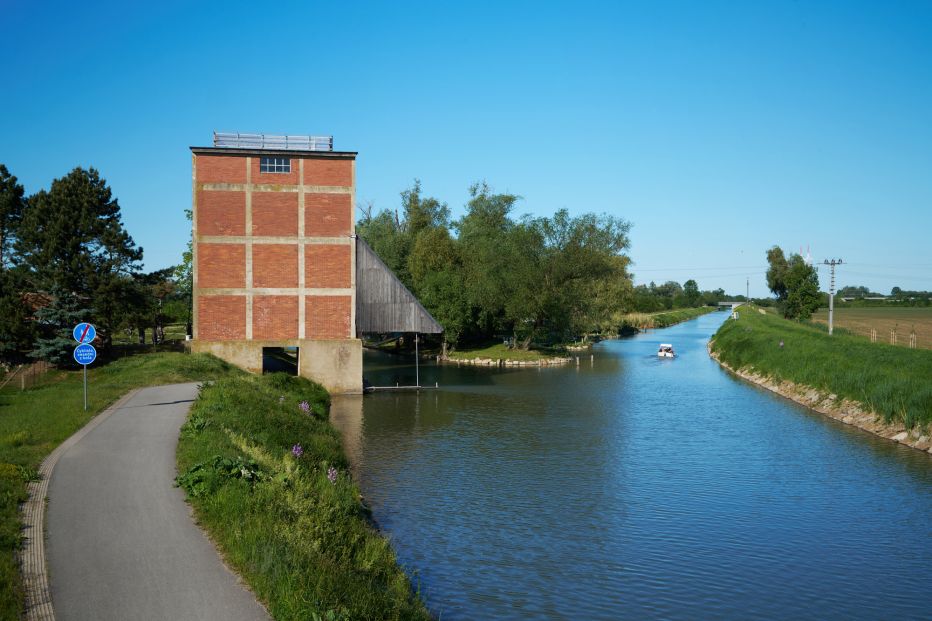
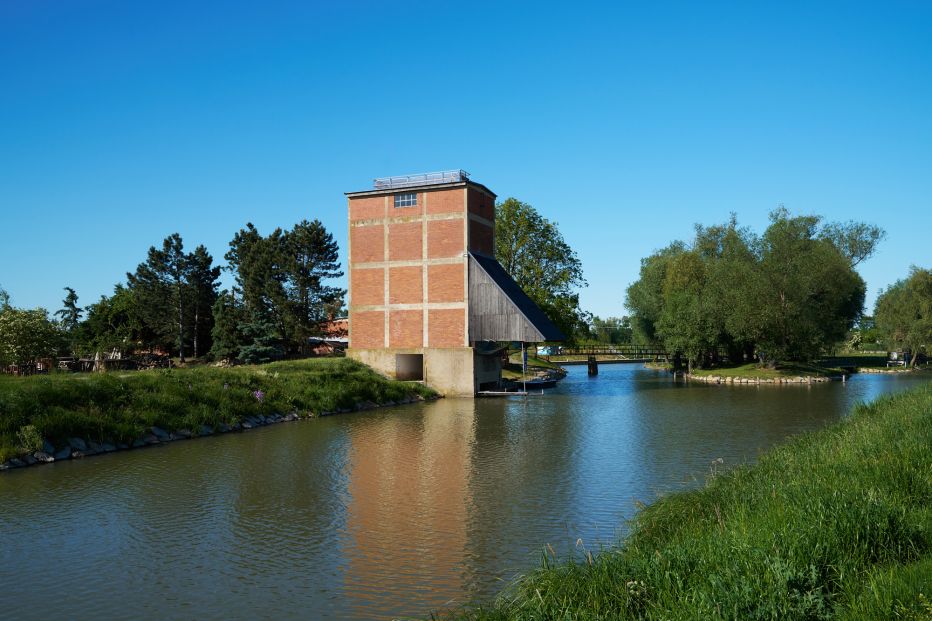
While sailing along the Baťa Canal or cycling along the bike path that runs alongside it, you’ll come across a structure near Sudoměřice that immediately catches the eye with its industrial architecture. The 1939 tipper is a key element of the original industrial chain used to transport fuel to the Baťa factories.
The history of the Otrokovice–Rohatec Canal (built between 1935 and 1938) is closely linked to the Baťa Company’s need to transport young brown coal—lignite. The raw material from the Tomáš Mine in Ratíškovice, located about 13 km away, was transported by rail to Sudoměřice. To ensure efficient transshipment from railcars to cargo barges with a capacity of up to 150 metric tons, engineers of the time designed a mechanized tipper.
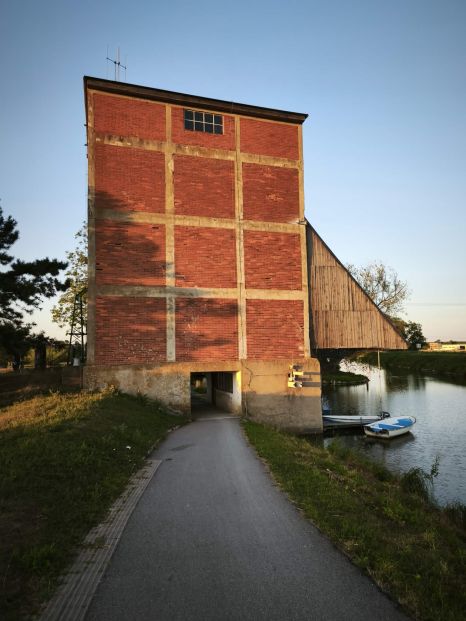
The tipper was completed in 1939. The entire transshipment process operated on a well-refined mechanical principle. A loaded railroad car carrying lignite was pulled into the spacious interior chamber of the tipping mechanism using a cable winch. Inside was a steel cradle equipped with rails and a hopper. Using a cable hoist, the entire cradle, along with the full car, was lifted upward. After the railcar was tilted, the coal spilled out through the front doors directly down a chute into the cargo hold of a ship moored beneath the structure.
The ships then continued north along the canal to the power plant in Otrokovice, which supplied electricity to both the shoe factories and Zlín’s extensive urban infrastructure.
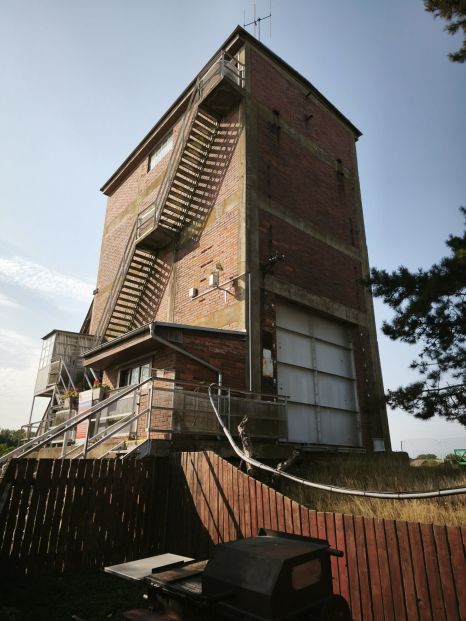
While commercial freight transport on the canal gradually ceased during the second half of the 20th century, the Sudoměřice tipper itself has been preserved as a protected technical monument. Today, you can stop here and take in the views of the Baťa Canal from the upper deck. The tipper’s mechanism has also been preserved inside, and at the dock you’ll find a small snack bar that’s open during the season.